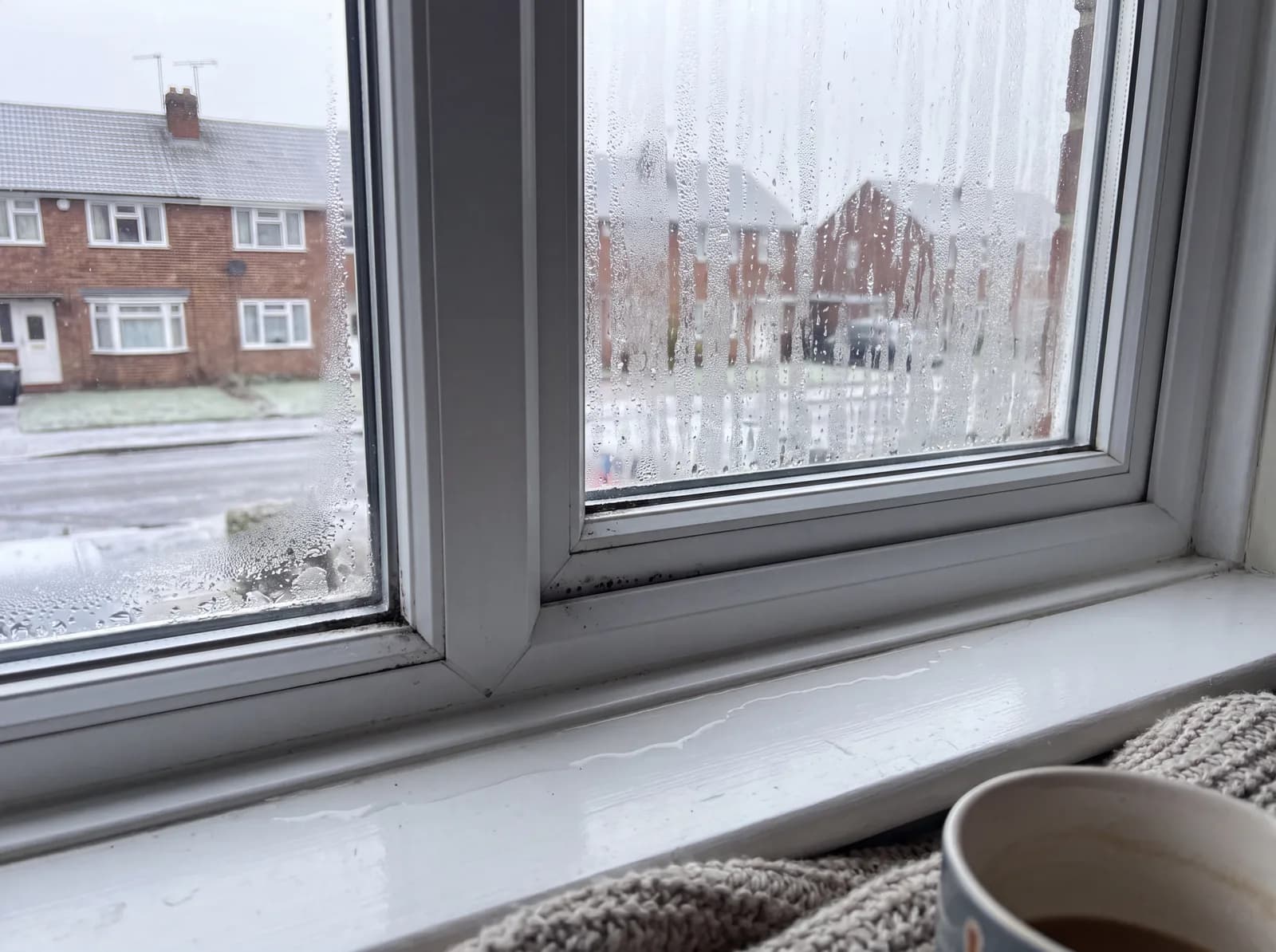
Why windows run with water in winter
Warm indoor air holds moisture from cooking, showers, drying clothes and breathing. When that air touches a surface colder than itself, it cools and drops the moisture as water. In winter the coldest surface in most rooms is the glass, so that is where it shows up first.
A bit of condensation on a cold morning is normal. What matters is where it forms and whether it clears.
Condensation on the inside of the glass
This is a moisture and ventilation problem in the room, not usually a fault with the window. It is most common in bedrooms overnight, bathrooms and kitchens.
If it clears by late morning, it is manageable. If it pools on the sill every day, it will eventually mark the frame, rot timber and grow black mould on the seals.
- Open the trickle vents at the top of the frame and leave them open through winter
- Run the extractor fan when cooking or showering, and for a while after
- Dry washing outside or in a ventilated room with the door shut
- Wipe the glass and sill dry in the morning so water is not left sitting on the frame
- Keep heating steady and low rather than letting rooms go cold and heating them in bursts
Condensation on the outside of the glass
Seeing mist on the outside on a cold, clear morning is usually a good sign. It means the inner pane is keeping the heat in, so the outer pane stays cold enough for dew to form on it. It burns off as the day warms up and needs no fix.
Condensation between the panes
This is the one that needs attention. A double-glazed unit is two panes sealed around the edge with a dry gap between them. If moisture or a milky haze appears inside that gap, the seal has failed. You cannot wipe it off from either side, and it will not clear on its own.
The good news is that the whole window rarely needs replacing. If the frame is sound, only the sealed glass unit is swapped. The frame, hinges and handles stay as they are.
When to get it looked at
Call someone out if you have mist between the panes, water soaking into the frame or wall below the window, or black mould returning on the seals after cleaning. Those are the points where a small fix stops being small.
Sutton, London & Surrey
Want it looked at properly?
Send a photo on WhatsApp or book a free, no-obligation visit. We quote the repair first wherever it makes sense.
Quick answers
Is condensation on the inside of double glazing a fault?
Usually not. Condensation on the room side of the glass comes from moisture in the room meeting cold glass. Better ventilation normally sorts it. Mist between the two panes is a fault and means the sealed unit has failed.
Can misted double glazing be fixed without replacing the window?
In most cases, yes. If the frame is in good condition, only the sealed glass unit is replaced and the existing frame stays in place.